Need a Virtual Number Right Now?
Skip the wait — rent an instant virtual number and start receiving SMS codes in seconds.
Are Temporary Phone Numbers Safe? Risks, Benefits, and Best Practices · 2:00
Transcript
Temporary phone numbers are increasingly being used to receive SMS messages, OTP codes, verify accounts, test applications, or limit the need to provide a personal phone number to too many websites. However, along with this convenience comes a very important question: Is using a temporary phone number safe? The short answer is: it can be safe if you use the right type of number, for the right purpose, and choose a trustworthy provider. In contrast, public numbers, shared numbers, or numbers that you only control for a few minutes are not suitable for bank accounts, primary email accounts, financial services, or any account that requires long-term recovery. Therefore, what matters is not viewing a temporary phone number as absolutely “safe” or “unsafe,” but understanding the level of risk associated with each type of number and using it in the appropriate circumstances. What Is a Temporary Phone Number and How Does It Work? A temporary phone number is a phone number provided for a limited period of time or intended to serve a specific purpose. Users can use this number to receive SMS messages, OTP codes, verification codes, or test a registration process without having to provide their primary phone number. A temporary number may exist for a few minutes, a few hours, a few days, or longer, depending on the provider's model. This is also why the term temporary phone number is often mentioned together with concepts such as virtual phone number, disposable phone number, burner number, or SMS receiving number. However, these terms are not exactly the same. A virtual phone number can be maintained long-term and does not necessarily have to be a temporary number. Meanwhile, a disposable number usually emphasizes one-time use or a very short period of use. The process is quite simple.
Temporary phone numbers are increasingly being used to receive SMS messages, OTP codes, verify accounts, test applications, or limit the need to provide a personal phone number to too many websites. However, along with this convenience comes a very important question: Is using a temporary phone number safe?
The short answer is: it can be safe if you use the right type of number, for the right purpose, and choose a trustworthy provider. In contrast, public numbers, shared numbers, or numbers that you only control for a few minutes are not suitable for bank accounts, primary email accounts, financial services, or any account that requires long-term recovery.
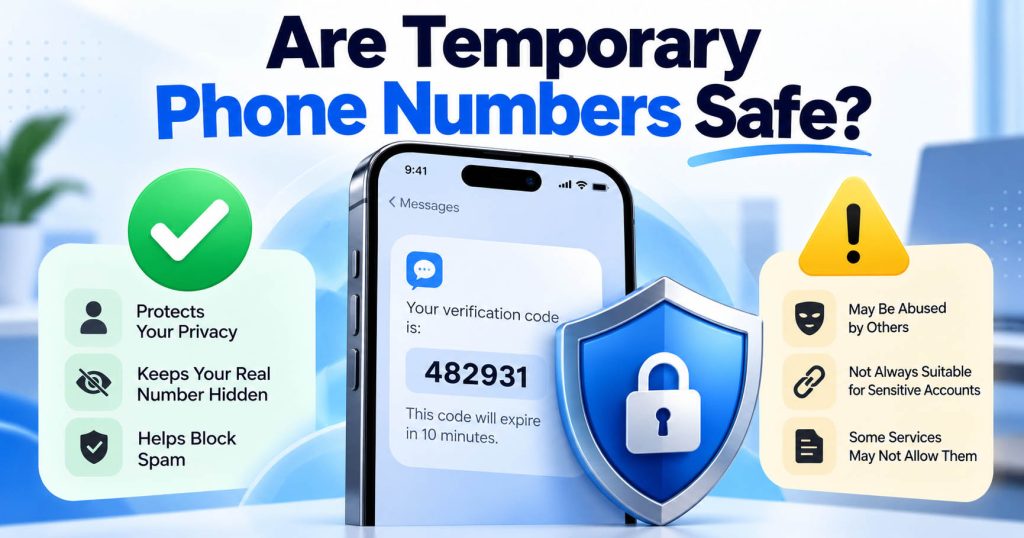
Therefore, what matters is not viewing a temporary phone number as absolutely “safe” or “unsafe,” but understanding the level of risk associated with each type of number and using it in the appropriate circumstances.
What Is a Temporary Phone Number and How Does It Work?
A temporary phone number is a phone number provided for a limited period of time or intended to serve a specific purpose. Users can use this number to receive SMS messages, OTP codes, verification codes, or test a registration process without having to provide their primary phone number.
A temporary number may exist for a few minutes, a few hours, a few days, or longer, depending on the provider’s model. This is also why the term temporary phone number is often mentioned together with concepts such as virtual phone number, disposable phone number, burner number, or SMS receiving number.
However, these terms are not exactly the same. A virtual phone number can be maintained long-term and does not necessarily have to be a temporary number. Meanwhile, a disposable number usually emphasizes one-time use or a very short period of use.
The process is quite simple. The user selects a phone number, enters that number into the website or application that requires verification, waits for the platform to send an SMS, reads the code in the provider’s inbox, and then enters the code back into the website. After the usage period ends, control over the number may be revoked.
Is a Temporary Phone Number a Fake Number?
Not necessarily. Many temporary phone numbers are real numbers provided through telecommunications infrastructure or online routing systems. The main difference lies in the usage period and the user’s control over the number.
Therefore, a temporary number should not be understood as a randomly generated string of digits that does not actually exist. However, whether it works with a specific website still depends on the type of number and the platform’s verification system.
Is Using a Temporary Phone Number Safe?
If the purpose is simply to register for a short-term service, test an SMS system, or receive a verification code for a less important account, a temporary number can be a relatively safe and convenient option.
However, the level of safety depends on many factors. A public number with an inbox that anyone can view will have a much lower level of privacy than a number assigned exclusively to you. Similarly, a number that you only control for a few minutes is not suitable for an account that may require re-verification several months later.
It can be understood simply that the safety of a temporary phone number depends on three main factors: who can view the SMS messages, how long you control the number, and how important the account linked to the number is.
What Is the Difference Between Public, Shared, and Private Temporary Numbers?
Not all temporary phone number are the same. This is one of the most important factors to understand before using one.
Public Temporary Number
A public temporary number usually comes with an SMS inbox that is publicly displayed on a website. Users do not need an account, or only need to access the page, to see messages sent to the number.
This type of number can be convenient for testing or non-sensitive content, but it should not be used for any account that has value. If an OTP is sent to a public inbox, other people may be able to read the code.
Therefore, a public number is not suitable for banking, primary email, account recovery, or any information that requires privacy.
Shared Temporary Number
A shared number is a number that can be used by multiple people or is placed in a shared pool. This increases the risk that the number has previously been registered with multiple services or has been flagged as unusual by some platforms. If a number has been used hundreds of times to register accounts, a website’s anti-fraud system may reject it.
Private Temporary Number
A private temporary number is usually assigned exclusively to one user for the duration of the rental period. This is generally a more private option because the inbox is not publicly accessible to everyone.
However, “private” does not mean that the user will own the number forever. You still need to check how long you control the number, the number recycling policy, and how the provider handles messages.
Security Benefits of Temporary Phone Numbers
One of the biggest benefits of a temporary number is limiting the need to provide your real phone number to unnecessary websites.
If a person uses the same personal number for banking, social media, marketplaces, newsletters, promotional programs, and many testing websites, that number will appear in many different databases. If one platform experiences a data breach, the primary phone number may be exposed.
Using a temporary number for short-term activities helps create a layer of separation. The primary phone number can be kept for banking, email, family, or account recovery, while the temporary number is used for trials, testing, or services that only require initial verification.
This separation can also help reduce spam. If a website later sends a large number of advertising messages, they will not directly affect your personal phone number.
In addition, temporary numbers are very useful for developers, QA testers, or product teams that need to test OTP delivery, SMS verification, or user onboarding processes without continuously using personal phone numbers.
Risks of Using Temporary Phone Numbers
Along with the benefits, temporary numbers also come with risks that users need to understand clearly.
A Public Inbox Can Expose OTP Codes
This is the most obvious risk. If the inbox is public, anyone viewing the number can also read the SMS messages sent to it. This is particularly dangerous if the SMS contains an account verification code. Therefore, public inboxes should only be used for testing purposes or non-important data.
Number Recycling Can Cause the Number to Be Reassigned
A temporary phone number is usually not under the user’s permanent control. After the rental period ends, the number may return to the pool and be assigned to another person. If you still have the number linked to an account, the new user of the number may receive SMS messages sent to the old number. This is why a temporary number should not be used for long-term account recovery.
You May Lose Access to the Account
Some accounts only require a verification code during registration. However, many platforms may require re-verification when you log in from a new device, change your password, or detect unusual activity. If the temporary number has expired, you may no longer be able to receive the code. In this situation, account recovery can become difficult or even impossible.
The Number May Have Been Used by Someone Else Before
A recycled number may previously have been linked to another account, received a large amount of spam, or been used for activities that violated platform policies. This can sometimes cause the number to be blocked by a website or require additional verification.
Some Websites Block Virtual or Temporary Numbers
Not every platform accepts virtual numbers. Some systems may check the carrier, number type, or usage history to determine whether the number is a VoIP number, shared number, or temporary number. Therefore, there is no guarantee that a temporary number will work with every website or application.
The Provider May Process SMS Data
SMS messages have to pass through the number provider’s systems, so users should pay attention to the privacy policy and data retention policy. A transparent service should clearly explain how SMS messages are stored, how long the data is retained, and who has access to the system. If a website provides temporary numbers but has very little information about the company, privacy policy, or terms of use, you should exercise caution.
Does a Temporary Phone Number Make You Completely Anonymous?
No. This is a very common misconception. A temporary number can help prevent a website from knowing your primary phone number, but the website may still collect many other types of data, such as your IP address, email address, cookies, browser fingerprint, account information, or payment information.
Therefore, a temporary number should be viewed as a data minimization tool, meaning that it reduces the amount of personal data you need to share, rather than as a tool for achieving complete anonymity. The greatest value of a temporary number is reducing the exposure of your primary number.
When Is It Relatively Safe to Use a Temporary Phone Number?
Temporary numbers are most suitable for activities that are short-term and low-risk. For example, if you only want to try an online tool, register for an account that does not contain important data, or test an OTP delivery process, a temporary number may be more reasonable than using your personal number.
Similarly, if you participate in a marketing campaign, receive a coupon, or use a website that you are not sure you will return to, avoiding the use of your primary number can help reduce future spam.
Marketplaces are also a situation where you may consider using a secondary or temporary number if your goal is to avoid giving your personal number directly to strangers. However, the key point is that you must accept the possibility of losing control of the number in the future.
When Should You Not Use a Temporary Phone Number?
If an account has financial value or requires long-term access, a temporary number is generally not a suitable choice. Bank accounts require a stable number to receive transaction OTPs, fraud alerts, and account recovery codes. E-wallets or financial services such as PayPal also require a number that you can control over the long term.
Your primary email account is another example. Email is often used for recovery across many other accounts, so you should not link its recovery method to a number that may disappear after a few hours.
Work accounts, government accounts, and long-term 2FA should also use a more stable number. A very simple principle to remember is:
If losing the account would cause you serious problems, do not depend on a phone number that you could lose control of at any time.
Is a Temporary Phone Number Safer Than a Personal Phone Number?
There is no absolute answer. A temporary number is better in some situations if the goal is to reduce exposure of your primary number. The website receives a temporary number instead of a number linked to your bank, email, or family members.
However, a personal number is better when the goal is to maintain long-term control. You can keep the number for many years, receive recovery codes, or contact your carrier if you encounter a problem.
Need a Virtual Number Right Now?
Skip the wait — rent an instant virtual number and start receiving SMS codes in seconds.
Therefore, temporary numbers and personal numbers are not really two directly competing options. Each serves a different purpose.
A personal number is suitable for identity, long-term recovery, and important accounts. A temporary number is suitable for short-term verification, testing, and reducing data exposure.
How to Choose a Safer Temporary Phone Number
If you decide to use a temporary number, choosing the type of number is very important. First, prioritize a private number if the SMS messages contain content that you do not want other people to see. A public inbox is only suitable for situations that do not involve sensitive data.
You should also check how long you will retain control of the number. If the service does not clearly specify the usage period or how numbers are reassigned, this is something to consider.
The privacy policy is also very important. A trustworthy provider should explain how it handles SMS messages, system logs, and user data.
In addition, do not choose a service simply because it is free. Free temporary numbers often come with certain trade-offs, such as public inboxes, shared numbers, or very limited control.
8 Principles for Using Temporary Phone Numbers Safely
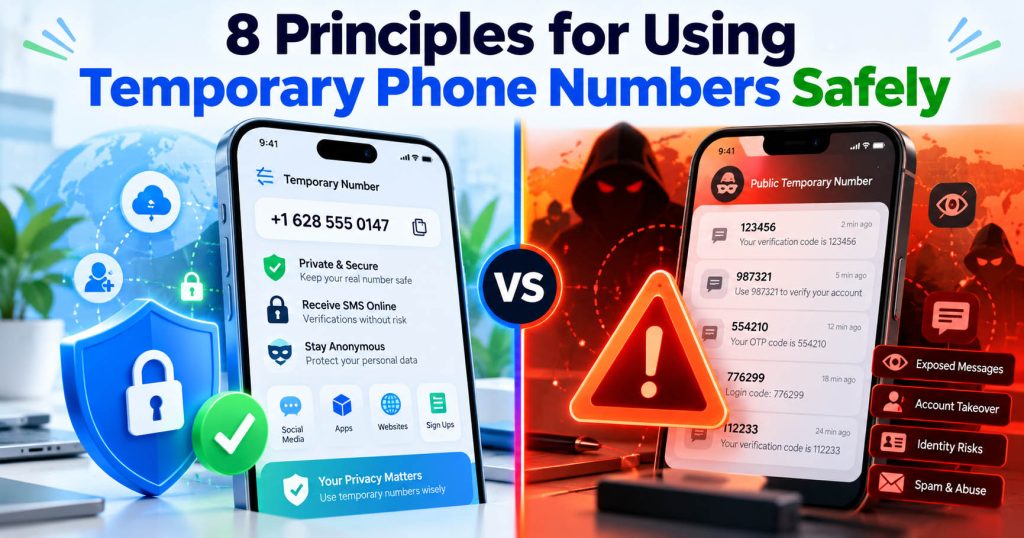
To use a temporary phone number more safely, users should follow some basic principles. You should not use a public number to receive sensitive data, and you should not link a temporary number to a bank account, primary email, or financial service.
You should also avoid using a short-term number as a recovery number, check how long you can retain control of the number before verification, and remove the number from your account if you know that you are about to lose control of it.
In addition, read the privacy policy, learn about the number recycling policy, and always assume that a temporary number may be reassigned to someone else in the future.
SMS Nova Expert Advice: Safety Depends on How You Use the Number
From SMS Nova’s perspective, the better question is not “Is a temporary phone number safe?” but:
“Is a temporary phone number suitable for the account I am creating?”
A bank account and a trial account do not have the same level of risk. Therefore, they should not use the same type of number.
For high-value accounts such as banking, PayPal, primary email, or account recovery, SMS Nova recommends using a long-term phone number that you can control reliably.
For marketplaces, work, or public-facing activities, a long-term secondary number may be more suitable.
For testing, trial accounts, or services that only require short-term verification, a **temporary phone number from SMS Nova** can help reduce the need to provide your primary number to many different websites.
The most important goal is data minimization. Using a temporary number correctly helps reduce the number of platforms that store your real phone number, but it should not be viewed as an absolute anonymity solution.
SMS Nova also recommends prioritizing a private temporary number when the SMS content requires privacy and not using a public inbox for any important account.
In addition, the ability to receive verification codes always depends on the policies of each platform, the country, and the type of number. No temporary phone number is guaranteed to work with every service.
Is Using a Temporary Phone Number Legal?
Using a temporary number or virtual number is not inherently illegal. Virtual phone numbers have many legitimate uses in business, customer support, testing, privacy, and communications. However, users must still comply with the laws in their country and the terms of use of each platform.
A temporary number should not be used for fraud, harassment, identity impersonation, or intentionally bypassing rules established by a service. Therefore, it is necessary to distinguish between the technology and how the technology is used. A legitimate tool can still be misused.
Common Misconceptions About Temporary Phone Numbers
One of the most common misconceptions is that a temporary number always provides anonymity. In reality, a website can still see many types of data other than the phone number.
Another misconception is that free numbers and private numbers have the same level of safety. Public inboxes and private inboxes have very significant differences in terms of privacy.
Many people also believe that once they receive an OTP successfully, the account will always remain secure. This is not necessarily true because a website may require verification again in the future.
In addition, temporary numbers can absolutely be recycled. Users should not assume that they will be the only person who has ever used the number.
Finally, not every website supports temporary numbers. Some platforms may reject virtual or shared numbers from the registration stage.
Checklist Before Using a Temporary Phone Number
Before entering a temporary number into a website, ask yourself a few questions. Does the message you are about to receive contain sensitive data? Is the inbox public or private? Will you need this account one year from now? Does the account require recovery? How long will you be able to control the number?
Most importantly, ask yourself: If I lose access to the phone number tomorrow, will I lose anything important?
If the answer is yes, a temporary phone number may not be the appropriate choice.
Frequently Asked Questions
Is a Temporary Phone Number Safe for Receiving OTPs?
It can be safe for low-risk accounts if the number is private and the platform supports it. You should not use a public inbox to receive important OTPs.
Can Other People See My SMS Messages?
If you use a public temporary number, they may be able to. With a private number, access is generally more restricted.
Is a Public Temporary Number Safe?
It is only suitable for non-sensitive content. It should not be used for important accounts.
Can Temporary Phone Numbers Be Recycled?
They can. Many providers return numbers to the pool after the usage period ends.
Should I Use a Temporary Number for Telegram?
If the Telegram account needs to be used long-term, you should make sure that you can maintain control of the number. A number that is only available for a very short period may cause problems when re-verification is required.
Should I Use a Temporary Number for PayPal or Banking?
It is not recommended. These are financial accounts that require a stable number and long-term account recovery.
Can a Temporary Number Be Used for 2FA?
It can in some short-term situations, but you should not use a temporary number for long-term 2FA on an important account.
What Happens When a Temporary Number Expires?
You may lose the ability to receive SMS messages, and the number may be reassigned to someone else.
Does a Temporary Number Help Hide My Real Number?
It can help prevent a website from knowing your primary phone number, but it does not make the user completely anonymous.
Is Using a Temporary Phone Number Legal?
In general, using this technology itself is not illegal, but you still need to comply with local laws and the terms of each platform.
Reference sources:
https://online-sim.org/blog/are-temporary-numbers-safe
https://binotp.com/en/blog/temporary-phone-number-privacy-a-safe-use-guide
https://readynum.com/blog/is-it-safe-to-use-a-virtual-number
https://www.smspinverify.com/blog/are-temporary-phone-numbers-actually-safe-to-use
Need a Virtual Number Right Now?
Skip the wait — rent an instant virtual number and start receiving SMS codes in seconds.

 Apple
 Telegram