Need a Virtual Number Right Now?
Skip the wait — rent an instant virtual number and start receiving SMS codes in seconds.
SMS Verification Privacy Risks: What You Need to Know · 2:07
Transcript
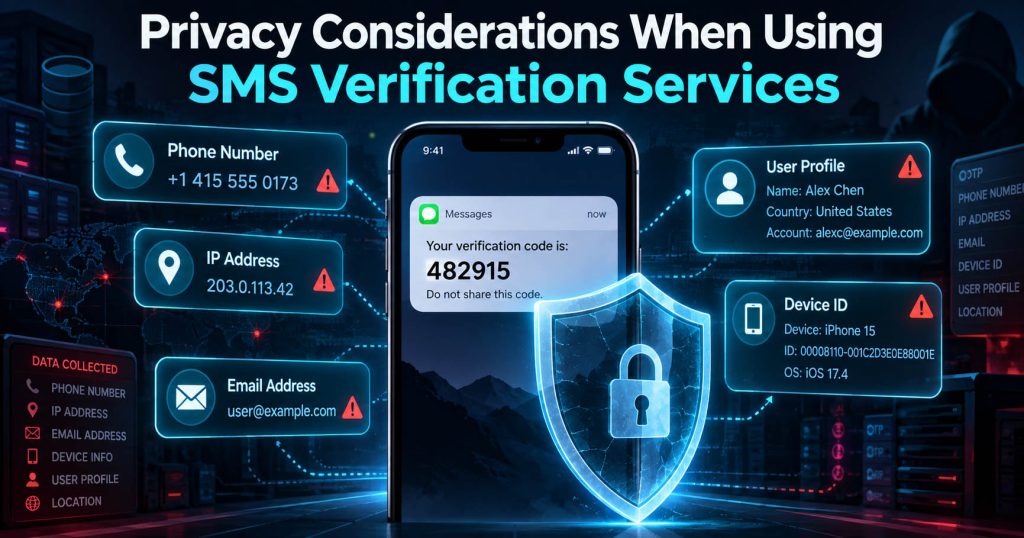
SMS verification is one of the most common methods for registering an account, logging in, receiving an OTP, or recovering access. However, every time a user enters a phone number into a website, they are not only requesting a verification code but also sharing an identifier that can potentially be used over the long term. Therefore, privacy when using SMS verification needs to be considered more carefully. What Is SMS Verification and What Data Is Used? SMS verification is the process in which a website or application sends a one-time code to a user's phone number to check that the person performing the action has access to that number. The process usually begins when the user enters a phone number. The system generates an OTP, sends a request to an SMS provider or SMS gateway, and then the carrier delivers the message to the user's device. When the code is entered back into the website, the system checks its validity and completes the verification step. On the surface, this process is quite simple. However, the data does not necessarily travel directly only between the user and the website. In many systems, the process also involves an authentication provider, SMS gateway, carrier, anti-fraud system, and technical analytics services. In addition to the phone number, a verification process may generate a significant amount of metadata, such as the time the OTP was requested, message delivery status, IP address, device, browser, request history, or the number of times an incorrect code was entered. This means that the privacy issue does not only concern the content of the SMS but also the entire set of data generated around the verification process. A Phone Number Is a Long-Term Identifier One of the most important factors to understand is that a phone number is not simply contact information. Unlike a username, which can be changed between websites, many people keep the same phone number for many years.
SMS verification is one of the most common methods for registering an account, logging in, receiving an OTP, or recovering access. However, every time a user enters a phone number into a website, they are not only requesting a verification code but also sharing an identifier that can potentially be used over the long term. Therefore, privacy when using SMS verification needs to be considered more carefully.
What Is SMS Verification and What Data Is Used?
SMS verification is the process in which a website or application sends a one-time code to a user’s phone number to check that the person performing the action has access to that number.
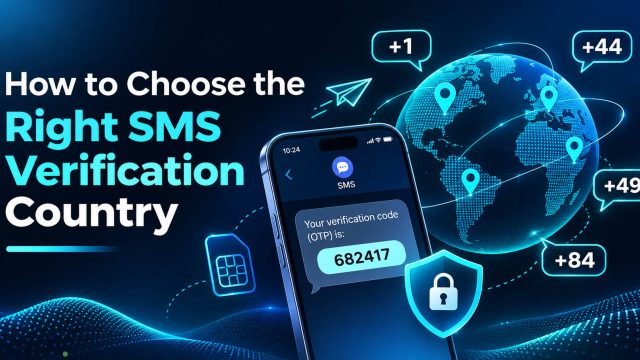
The process usually begins when the user enters a phone number. The system generates an OTP, sends a request to an SMS provider or SMS gateway, and then the carrier delivers the message to the user’s device. When the code is entered back into the website, the system checks its validity and completes the verification step.
On the surface, this process is quite simple. However, the data does not necessarily travel directly only between the user and the website. In many systems, the process also involves an authentication provider, SMS gateway, carrier, anti-fraud system, and technical analytics services.
In addition to the phone number, a verification process may generate a significant amount of metadata, such as the time the OTP was requested, message delivery status, IP address, device, browser, request history, or the number of times an incorrect code was entered.
This means that the privacy issue does not only concern the content of the SMS but also the entire set of data generated around the verification process.
A Phone Number Is a Long-Term Identifier
One of the most important factors to understand is that a phone number is not simply contact information. Unlike a username, which can be changed between websites, many people keep the same phone number for many years. They may use that number for email, social media, marketplaces, banking, messaging applications, and other services.
When the same number appears on multiple platforms, it can become a form of persistent identifier, meaning an identifier that remains in use over a long period of time. This does not mean that every website automatically shares or combines data with one another. However, from a technical perspective, using the same identifier across multiple systems increases the possibility that data can be linked when it appears in the same data source, a leaked database, or a third-party analytics service.
This is why a phone number can have greater value than an ordinary username. It does not only represent an online account but is also often linked to a real-world identity.
What Can a Website Collect When You Verify by SMS?
The clearest piece of information a website receives is the phone number you enter. However, depending on the system, the related data may be more extensive. The country code of the number may indicate the country or region. Lookup services may help identify the carrier, number type, or whether it is a mobile, VoIP, or some form of virtual number. In addition, the system may record the time of verification, the number of code requests, the number of failed verification attempts, and the delivery status.
If SMS verification is part of the registration or login process, the website may also typically collect other data such as IP address, browser information, device information, or cookies.
After successful verification, the phone number may be stored as an attribute of the account and continue to be used for 2FA, password resets, marketing, or security alerts, depending on the service’s policies. Therefore, before providing a phone number, users should find out whether the service uses the number only for verification or also for other purposes.
SMS Verification Can Increase the Possibility of Linking Identities
If a user uses the same phone number across multiple platforms, that number can become an “anchor point” between different profiles.
For example, the same number may appear on an email account, social media profile, marketplace account, and delivery application. If data from one of these systems is leaked together with an email address or name, the phone number may become a factor that helps connect the different pieces of data.
Another risk is that people-search services or reverse lookup databases may collect and aggregate information from multiple public or commercial sources. If a phone number has already appeared in these types of databases, connecting the number with a name, email address, or other data may become easier.
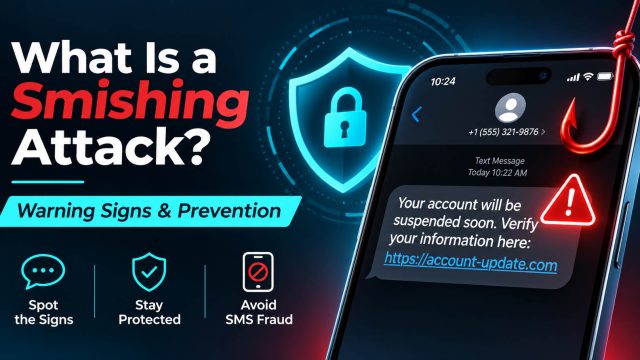
In some cases, leaked data can also be used to conduct personalized smishing or phishing attacks. When an attacker knows that you use a specific service, a fraudulent message can be made much more convincing.
SMS Is Not a Communication Channel With Absolute Security
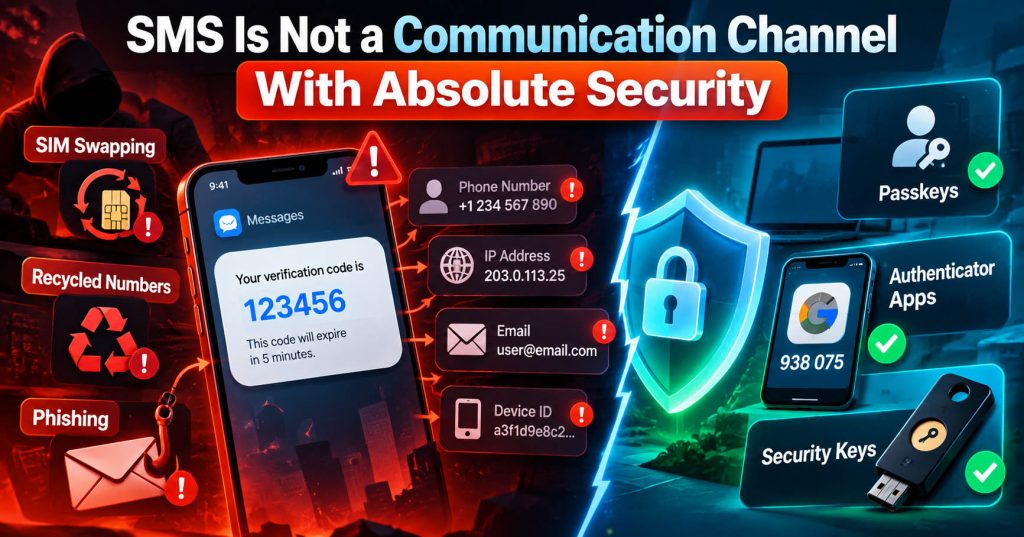
SMS was designed long before modern requirements for encryption and authentication became widespread. Unlike many modern messaging platforms, traditional SMS does not provide end-to-end encryption by default.
This does not mean that every SMS can be easily read by someone else, but it shows that SMS should not be considered a communication channel with a level of security equivalent to modern encrypted protocols.
In addition, telecommunications systems may have risks related to signaling, routing, and interception in certain special circumstances.
A more common risk for ordinary users is phishing. An attacker may send a fraudulent SMS impersonating a bank, social network, or popular service and ask the user to enter the OTP on a fake website. In this case, the SMS may be delivered correctly to the user’s device, but the code can still be stolen because the recipient is tricked into providing the code.
How Does SIM Swapping Affect Privacy?
SIM swapping occurs when an attacker attempts to transfer control of a victim’s phone number to another SIM or eSIM. When the process is successful, SMS messages and calls may be redirected to the attacker’s device instead of the legitimate owner’s device.
This is particularly dangerous when a phone number is used for OTPs or account recovery. The attacker may receive security codes, password reset messages, or login confirmations that should only be received by the legitimate user.
The risk here is not only losing access to an account but also directly concerns privacy. SMS messages may reveal the name of a service, login times, security alerts, or other information about the user’s online activities.
A notable sign of a SIM swap is when the phone suddenly loses signal and can no longer receive SMS messages or calls even though it was working normally before. In this situation, users should contact their carrier and check their important accounts as soon as possible.
Number Recycling Also Creates Privacy Issues
Not every risk comes from hackers. Another issue is number recycling, meaning that a phone number is reclaimed and reassigned to a new user after the previous owner stops using it. If the previous owner forgets to update the number in their accounts, the system may continue sending OTPs, login alerts, or password reset messages to the recycled number.
The new owner of the number may unintentionally receive SMS messages related to someone else’s accounts. This is why a phone number should not be considered an identifier that exists permanently. When preparing to stop using a number, users should update the number in their primary email, financial accounts, social media, 2FA, and important services before the SIM is deactivated.
Public SMS Inboxes Can Expose Data
A public SMS inbox is one of the biggest risks when users look for free SMS receiving services on the Internet. These services usually display a list of publicly accessible numbers, along with the SMS messages received on the website. Anyone who accesses the page may be able to see the messages. If an OTP is sent to such an inbox, the code is no longer private.
The problem can be even more serious when an SMS contains a verification link or one-click login link. In this case, other people may see not only the OTP but also a URL that could be directly related to the verification session.
Therefore, a public SMS number should not be used for banking, primary email, financial services, account recovery, or any account that has value. If privacy is the main goal, a private temporary number or dedicated number is more suitable than a public inbox.
Third-Party SMS Providers May Process Your Data
Many people assume that when a website sends an OTP, the message is sent directly from the website to the phone. In reality, many businesses use third-party SMS gateways or authentication providers. These providers may receive the phone number, OTP, message template, request metadata, or delivery status to carry out the sending process.
In some systems, logs may be retained for a certain period of time for debugging, fraud detection, billing, or compliance purposes. Therefore, when evaluating privacy, users should not only pay attention to the website they are registering with but also understand that multiple parties may be processing data behind the scenes.
Another factor is cross-border data processing. If an authentication provider has international infrastructure, data may be processed in different regions depending on the service configuration and applicable legal requirements.
You should not assume that all SMS providers have the same policies. The best approach is to check the privacy policy, especially sections related to data retention, sharing, subprocessors, and deletion.
SMS OTP Can Reveal More Than Just a Verification Code
An SMS verification message usually contains more than just six digits. The message may include the name of the application, the name of the service, or the type of action being performed. For example, a message such as “Your login code for…” may reveal that the user has an account with a specific service.
The timestamp of the SMS can also reveal when the user registered, logged in, or performed a security-related action. Some services also send a login link instead of a standard OTP. If such a message is exposed, other people may learn much more information than just a short-lived code.
Therefore, SMS privacy should not be evaluated solely based on the fact that an OTP expires after a few minutes. The metadata and accompanying content may still have value.
Does SMS Verification Really Verify Identity?
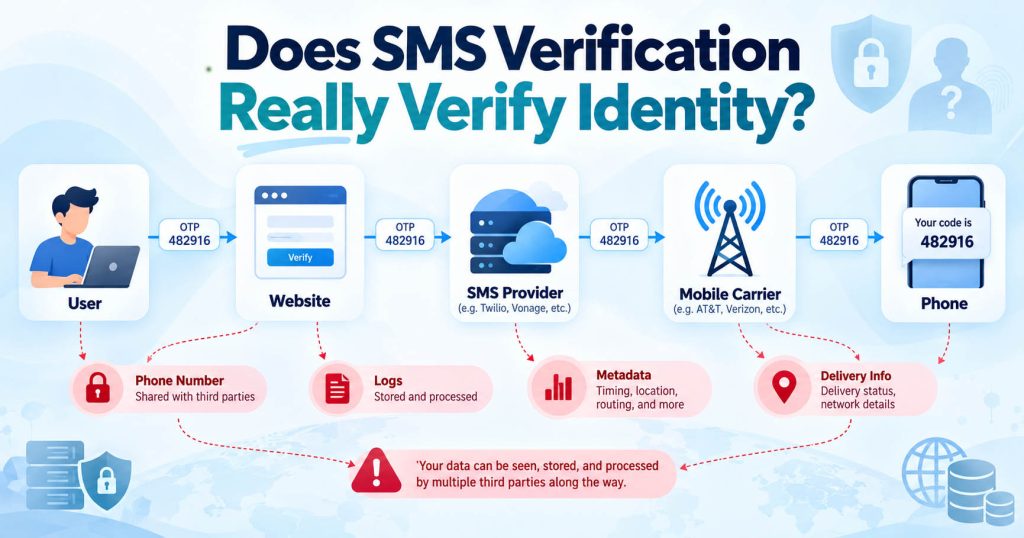
One very important point that is often misunderstood is that an SMS OTP does not necessarily prove a person’s real identity. What SMS verification is best at proving is that the person performing the action has access to the number at that particular time.
These two concepts are not exactly the same. If a number has been SIM-swapped, reassigned, or is currently controlled by someone else, the OTP can still be received even though the recipient is not the original account owner.
Therefore, phone possession does not absolutely mean identity. This is particularly important for services that require KYC or stronger identity verification. SMS OTP should only be one part of a verification system rather than being treated as the sole proof of identity.
Who Faces Higher Privacy Risks When Using SMS Verification?
The risk is generally higher for people who use the same phone number across many different services. If a number appears on a shopping website, social media, email, marketplace, and many online tools, its level of exposure will be greater than that of a number used only for a few important accounts.
Need a Virtual Number Right Now?
Skip the wait — rent an instant virtual number and start receiving SMS codes in seconds.
Online sellers or people who publicly display their phone number for work may also face higher risks because the number is easier to find. Financial accounts are another group that requires particular caution because attackers often have greater motivation to gain access to them.
Users of public SMS inboxes face an even more direct risk because the message content may be publicly displayed. In addition, people who frequently change their number or SIM should pay attention to account recovery and number reassignment.
How to Reduce Privacy Risks When Using SMS Verification
One of the most important principles is to provide your phone number only when it is truly necessary. If a website allows you to use email or another verification method and you have no clear reason to provide your number, keeping your personal data private may be a better choice.
This is precisely the principle of data minimization, meaning reducing the amount of data that needs to be shared to the necessary level. Another strategy is to separate phone numbers based on their purpose.
A personal number can be reserved for banking, primary email, and account recovery. A secondary number can be used for work or marketplaces. Meanwhile, a temporary number can be considered for short-term signups, testing, or lower-risk verification when the platform allows it.
If using a temporary number, public inboxes should be avoided for any sensitive data. Users should also check the service’s privacy policy to find out whether the phone number is used for marketing, how long it is stored, and whether it is shared with third-party providers.
More importantly, OTPs should not be shared with anyone. If someone calls or sends a message claiming to be a support representative and asks you to read out a security code, this is a sign that you should be cautious. If a service supports an authenticator app, passkey, or hardware security key, users may consider switching to these stronger methods rather than relying entirely on SMS.
Can a Temporary Phone Number Help Protect Privacy?
In many situations, a temporary phone number can help reduce the exposure of your primary number. If you use a temporary number for a short-term signup, the website does not need to know the phone number used for banking, email, or other important accounts.
This also reduces the likelihood of the same number appearing in too many databases. However, a temporary number does not mean anonymity. The website can still collect your IP address, email address, cookies, browser fingerprint, payment data, or device information.
In addition, a public temporary number can even make privacy worse if SMS messages are publicly displayed. Therefore, users should prioritize a private temporary number if the SMS content needs to remain private and should carefully consider the rental period, number recycling, and the possibility of needing account recovery later.
SMS Nova Expert Assessment: Privacy Is Not Just About “Hiding Your Phone Number”
From SMS Nova’s perspective, every time a user enters a phone number into a website, it should be viewed as a data-sharing decision rather than simply a technical step to receive an OTP. A common mistake is using the same primary phone number for most platforms. This approach is convenient but also causes a single identifier to appear across many different systems.
SMS Nova recommends separating numbers based on the value of the account. A personal number should be reserved for banking, primary email, account recovery, and important accounts. A secondary number may be suitable for work or public communications. A temporary number can be used for short-term verification, testing, or lower-risk platforms when supported.
Another important point is that a temporary number only provides privacy benefits when the inbox is controlled. If messages are publicly displayed, hiding the primary number no longer provides much benefit when the OTP or verification link itself is exposed.
SMS Nova also does not recommend using a temporary number for long-term account recovery. Privacy should not be traded for the risk of losing access to an account in the future. The practical goal should be data minimization, meaning reducing the number of websites that store your personal number, rather than trying to create “complete anonymity.”
For short-term verification, testing, or registration on platforms that support virtual numbers, users may consider a temporary phone number from SMS Nova to limit the need to provide their personal number. However, the ability to receive OTPs depends on the platform, country, number type, and verification policy at the time of use. No temporary number is guaranteed to work with every service.
SMS Verification Compared With Other Authentication Methods in Terms of Privacy
SMS OTP has a major advantage in terms of simplicity. Users do not need to install additional software, and almost every smartphone can receive messages. However, this simplicity comes with the need to provide a phone number. An authenticator app usually does not require an OTP to be sent over the mobile network each time you log in. After setup, the code can be generated directly on the device.
Passkey takes this a step further by allowing authentication using cryptographic credentials instead of a password or OTP sent via SMS. This method also provides better phishing resistance in many modern implementations. A hardware security key provides a high level of security and does not require a phone number for each authentication, but it may be less convenient for general users. Therefore, SMS verification remains useful, but it is not always the best choice in terms of privacy or security.
Common Privacy Mistakes When Using SMS Verification
A common misconception is that because an OTP expires after a few minutes, it does not create a privacy risk. In reality, the risk also comes from the number, metadata, service name, and other information contained in the message.
The second mistake is using the same number on every website. This increases exposure and the possibility of data linking. Another misconception is viewing SMS as a completely private channel. While SMS is very convenient, it was not designed as a modern secure messaging protocol. Public SMS inboxes are also often used for the wrong purposes. A public number may be suitable for testing, but it should not be used for important accounts.
Users also often forget to update their number when they change SIMs or stop using a number, causing the account to continue sending SMS messages to a number that may later be reassigned to someone else. Finally, a temporary number does not provide absolute anonymity. It only helps reduce exposure of the primary number in certain situations.
Privacy Checklist Before Verifying via SMS
Before entering a phone number into a website, ask yourself whether the service actually needs the number and whether this data is used only for verification or is also used for marketing, recovery, or other purposes.
You should also review the privacy policy to find out how long the data is stored and whether a third-party SMS provider is involved. If the account needs to be used for many years, consider the risk of losing control of the number in the future. If the website supports an authenticator app or passkey, you should also compare these methods with SMS OTP before making a choice.
When using a temporary number, check whether the inbox is public or private, how long the usage period lasts, and whether the number may be recycled afterward. A very useful question is: If I lose control of this phone number tomorrow, will the account still be secure? If the answer is no, you should consider a more stable authentication method.
Frequently Asked Questions
Does SMS Verification Expose Your Phone Number?
The website needs to receive your phone number in order to send an OTP, so the number is shared with the service and may be stored depending on its privacy policy.
Can a Website Store Your Phone Number After Verification?
It can. The retention period and purpose of use depend on each service.
Is a Phone Number Personal Data?
In many legal systems and privacy contexts, a phone number may be considered personal data because it can be linked to an individual.
Is SMS OTP End-to-End Encrypted?
Traditional SMS does not provide end-to-end encryption like modern encrypted messaging applications.
Can an SMS Provider Process the OTP?
It can. If a website uses a third-party SMS provider, the data necessary to send the message may pass through the provider’s systems.
How Does SIM Swapping Affect SMS Verification?
If an attacker takes control of the number, they may receive SMS verification or recovery codes instead of the account owner.
Is Number Recycling Dangerous?
It can be. If an account remains linked to a number that has been reassigned, SMS messages may be sent to the new owner of the number.
Is a Public SMS Inbox Safe?
It is not suitable for sensitive data because multiple people may be able to see the messages.
Can a Temporary Phone Number Help Protect Privacy?
It can help reduce exposure of your personal number, but it does not guarantee anonymity and must be used for the appropriate purposes.
Does SMS Verification Help Users Stay Anonymous?
No. The website may still collect other identifiers such as IP address, email address, or device information.
Is a Passkey More Private Than SMS OTP?
In many situations, a passkey does not require sharing a phone number for each authentication and provides better phishing resistance than SMS.
When Should You Not Use SMS Verification?
If the account has high value and the platform supports a stronger phishing-resistant method such as a passkey or hardware security key, users should consider that method.
Reference sources:
https://security.googleblog.com/2023/09/sms-security-privacy-gaps-make-it-clear.html
https://pages.nist.gov/800-63-4/sp800-63b/authenticators
https://www.enisa.europa.eu/publications/countering-sim-swapping
https://www.enisa.europa.eu/publications/how-to-avoid-sim-swapping-leaflet
https://www.twilio.com/docs/verify/sms
Need a Virtual Number Right Now?
Skip the wait — rent an instant virtual number and start receiving SMS codes in seconds.

 Apple
 Telegram