Need a Virtual Number Right Now?
Skip the wait — rent an instant virtual number and start receiving SMS codes in seconds.
You have just clicked Send Code, and the website says that the verification code has been sent, but after several dozen seconds, you still do not see the SMS. One minute passes, then two minutes, while the OTP may only be valid for a short period of time. This is a fairly common situation when registering an account, logging in, recovering a password, or using two-factor authentication.
From the perspective of SMS Nova, which frequently works with virtual phone number, temporary phone number, and SMS Verification, we have found that users often assume that a delayed SMS means the phone number is faulty. In reality, an OTP can be delayed at many different points before reaching the recipient.
A verification message does not usually travel directly from the website to the phone. It may have to pass through the OTP system, SMS Gateway, messaging provider, telecommunications network, destination carrier, and finally reach the device or SMS receiving dashboard.
So, why can SMS verification messages be delayed, how can you distinguish between a delayed SMS and an SMS that was not successfully delivered, and what should you do when an OTP arrives too late? The article below will explain these points in detail.
What Is SMS Verification and How Does the OTP Sending Process Work?
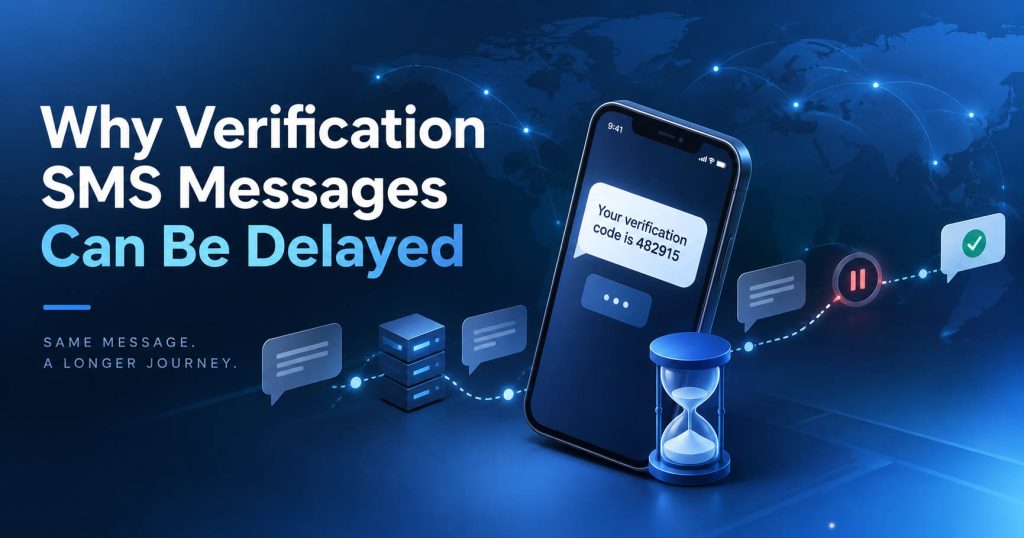
SMS Verification is a verification method in which a website or application sends a verification code to the phone number provided by the user. This code is commonly called an OTP or verification code.
SMS Verification commonly appears when users register an account, log in on a new device, enable two-factor authentication, recover a password, or perform an action that requires verification of access to the phone number.
From the user’s perspective, the process seems simple:
Enter the number → receive the SMS → enter the code → verification successful
However, the process behind the scenes is more complex. When you click “Send Code,” the website generates an OTP and sends a request to the SMS system. This request is then routed through one or more gateways, carriers, and telecommunications networks before reaching the destination phone number.
If the phone number is a virtual phone number, the message may continue to be processed and displayed on a dashboard instead of appearing in the smartphone’s SMS application. Because there are multiple intermediary layers, an SMS does not always appear immediately.
See also: What Is SMS Verification?
What Is SMS Latency?
In the SMS field, latency can be understood as the delay between the time the system starts sending a message and the time the recipient actually sees the SMS.
It is important to distinguish between two situations:
SMS delayed means that the message is still being processed and may arrive later.
SMS delivery failed means that the delivery process has failed and the message may not arrive.
This distinction is very important. If the SMS is only delayed, the user may need to wait a little longer. But if the route is incompatible or the platform does not accept the number, continuing to wait may not solve the problem.
Why Can SMS Verification Messages Be Delayed?
There is no single cause. In practice, SMS Verification Delay can originate from the sending system, the carrier, the international route, or the receiving device.
The Telecommunications Network Is Overloaded
One of the most common causes is network congestion. During certain periods, carriers and SMS systems may have to process a very large volume of messages.
For example, when a major platform launches a promotion, releases a product, or has millions of users logging in at the same time, the number of OTPs generated can increase suddenly. Instead of being processed immediately, some messages have to wait in a queue. This is similar to many vehicles passing through a toll booth at the same time: the system is still operating, but each vehicle has to wait longer.
SMS Has to Pass Through Multiple Intermediary Routes
Not every SMS is sent directly from the provider to the final carrier.
In some cases, the flow may look like:
Application → SMS Provider → Aggregator → Transit Network → Destination Carrier
The more intermediary layers there are, the more places there may be for queues, retries, or processing delays to occur. This is one reason why international SMS can sometimes be slower than domestic SMS.
SMS Route Quality
Not all SMS routes have the same quality. Some routes have a more direct connection to the destination carrier, while other routes have to pass through more intermediaries.
In practice, a phone number may receive a Steam verification code within a few seconds but receive a code from another application significantly more slowly. This does not necessarily mean that there is a problem with the phone number. The two applications may use completely different SMS providers or routes.
Carrier Filtering
Carriers have to process a large volume of A2P SMS — messages sent automatically from applications to users. To limit spam, phishing, and inappropriate traffic, carriers often use automated filtering systems.
The system may consider many signals, such as sending frequency, sender identity, message content, and traffic patterns. During the checking process, an SMS may take additional time before being forwarded. In other cases, the SMS may be blocked completely. Therefore, carrier filtering can be related to both delay and delivery failure.
Inappropriate Sender ID or Sending Information
In some countries, the sender used to send SMS messages must comply with specific regulations. If a business sends SMS using an unregistered sender or an inappropriate format, the carrier may apply stronger filtering.
This is particularly important for international SMS and A2P traffic. From the recipient’s perspective, you cannot control this factor. However, it explains why a service may send OTPs very quickly in one country but slowly or unsuccessfully in another country.
The Recipient’s Phone Is Temporarily Unable to Connect
Not every delay originates from the sending system. If the phone is turned off, is in an area with a weak signal, or is temporarily unable to connect to the network, the carrier may hold the SMS and try to deliver it again later. When the device reconnects, the message may appear. This can make users feel that the OTP “arrived late,” even though the message had actually been held by the carrier beforehand.
Roaming
When using a SIM card abroad, the message may have to pass through additional roaming networks. This creates more processing steps. A domestic SMS may arrive within a few seconds, while the same sender sending a message to a subscriber who is roaming may take much longer.
The SMS Application or Device Displays the Message Slowly
Sometimes the SMS has already reached the device, but the user does not see it immediately. The cause may be related to the Messages application, spam filters, Unknown Senders, or a temporary device issue. If OTPs normally arrive but one suddenly takes longer than usual, you should also check the message filtering folders before requesting a new code.
How Do SMS Queues and Throughput Affect OTP Delivery Speed?
An important cause of SMS Verification Delay that few users know about is the message queue. When the system receives more sending requests than it can process immediately, the messages have to be queued.
For example, suppose a sender can process a certain number of SMS messages per second. If, within a very short period of time, the system needs to send a significantly larger number, the remaining messages will stay in the queue.
The concept of MPS – Messages Per Second is used to describe the ability to process messages within a given period of time. If the throughput is not sufficient for the actual traffic, the queue will become longer.
Why Are OTPs More Sensitive to Queues Than Normal SMS Messages?
OTPs differ from marketing messages or regular notifications in one very important aspect: the code has an expiration time. If a marketing email arrives five minutes late, the user can still read it normally.
But if an OTP is valid for only a few minutes and the SMS remains in the queue for too long, the user may receive the code when the verification period is almost over. This is why businesses implementing SMS Verification need to pay particular attention to latency and throughput.
How Can Carrier Filtering Delay SMS OTPs?
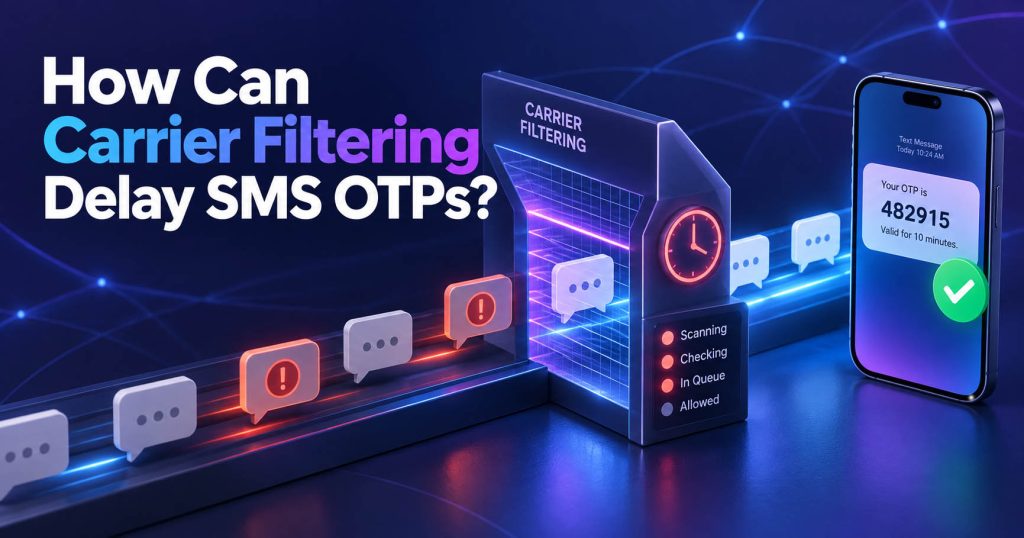
Carrier filtering is generally designed to protect networks and users from spam or malicious messages. However, any automated filtering system needs to evaluate traffic before deciding how to process it.
Factors that may affect this include sender reputation, the volume of messages sent within a short period of time, content, frequency, and traffic history. A valid OTP may still experience additional delay if the route or sender is being checked.
It is important to distinguish between:
Delayed: The SMS may still arrive.
Filtered/Blocked: The SMS may not be delivered.
From the user’s perspective, these two situations may initially look the same. You only see that the OTP has not appeared. If you wait too long and the message does not arrive while SMS messages from other services are still working normally, the problem may be with the sender or route rather than your device.
Why Is International SMS Verification More Likely to Be Delayed?
International SMS is often more complex than domestic SMS. A message sent from a system in country A to a number in country B may have to pass through multiple carriers and interconnects. Each country also has its own regulations regarding A2P messaging, Sender ID, and content.
Therefore, international SMS may encounter:
More routing layers, different carrier filtering, sender registration requirements, and differences in telecommunications infrastructure. This explains why, on the same platform, users in two different countries may receive OTPs at different speeds.
Need a Virtual Number Right Now?
Skip the wait — rent an instant virtual number and start receiving SMS codes in seconds.
At SMS Nova, this is a particularly important factor because users often choose temporary phone number from many different countries. A route that operates very quickly in one market may not necessarily have the same latency in another market.
Why Can an SMS Verification Message Arrive After the OTP Has Expired?
This is a situation that causes many people to mistakenly think that the phone number is faulty. In reality, OTP generation and SMS delivery are two different processes. As soon as you click Send Code, the website may generate the OTP and start counting its validity period. Meanwhile, the SMS still has to be processed and delivered to the recipient.
It can be visualized as:
OTP generated → validity time starts counting → SMS enters the queue → carrier processes it → SMS arrives → user enters the code
If the total delivery time is too long, the OTP may be close to expiring by the time the user receives it.
In a worse-case scenario:
Delivery delay > OTP expiration time
The result is that the user has just received the SMS, but the code is no longer valid.
Why Can Pressing Resend Code Multiple Times Make Everything More Complicated?
When they do not see the OTP, many people repeatedly press Resend. This can create multiple requests in the system. If the SMS messages experience different delays, their arrival order may not be the same as their sending order.
If the user does not check the timestamp, they may enter OTP A even though code B is the code that should be used. In addition, too many requests can trigger a rate limit. Therefore, we always recommend that users wait according to the website’s timer before sending a new request.
Why Is SMS Verification Slow When Using a Virtual Phone Number?
A question we often receive at SMS Nova is: “Does a virtual phone number make SMS slower?” The answer is not necessarily. Latency depends on many factors, such as the route, carrier, sender, country, and the website’s policies. A Virtual Phone Number may receive an OTP within a few seconds from one service but take longer when used with another service.
Websites May Handle Virtual Numbers Differently from Regular Mobile Numbers
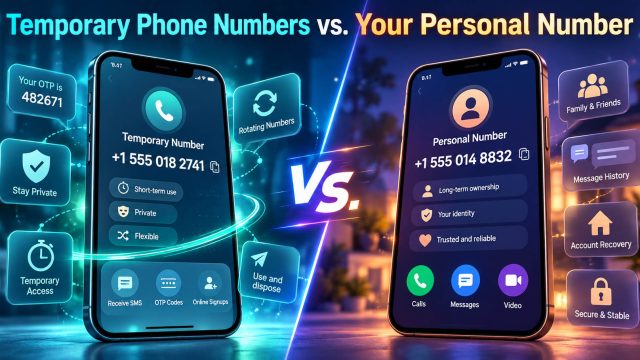
Some platforms check the line type before sending an SMS. If they restrict VoIP Numbers, Temporary Numbers, or Disposable Numbers, the issue is no longer delay. It is a compatibility restriction. These two situations need to be clearly distinguished.
SMS delay: the website accepts the number, but the SMS is taking time to arrive.
Number restriction: the website does not accept that type of number, so the SMS may not be sent.
Shared Numbers May Face Additional Restrictions
If a number is used multiple times, the platform may apply anti-abuse controls or limit requests. This can make the verification process more difficult. Therefore, the quality of a number should not be evaluated solely based on whether a particular OTP arrives slowly.
What Should You Do When SMS Verification Is Delayed?
When the OTP has not arrived, the first thing to do is check the phone number and country code again. If you are using a physical SIM, check the signal and whether you can receive normal SMS messages. After that, do not immediately press Resend Code multiple times. Follow the website’s timer. If the SMS eventually appears but you have requested multiple OTPs, check the timestamps and prioritize the code belonging to the latest request.
You should also check Spam, Unknown Senders, or SMS Filter if you are using a smartphone. If the platform supports other methods such as email, voice call, authenticator app, or passkey, these may be alternative options when SMS continues to be delayed.
What Should You Do When SMS Verification Is Delayed on SMS Nova?
If you are using SMS Nova, we recommend that users start by checking the correct country and the correct service.
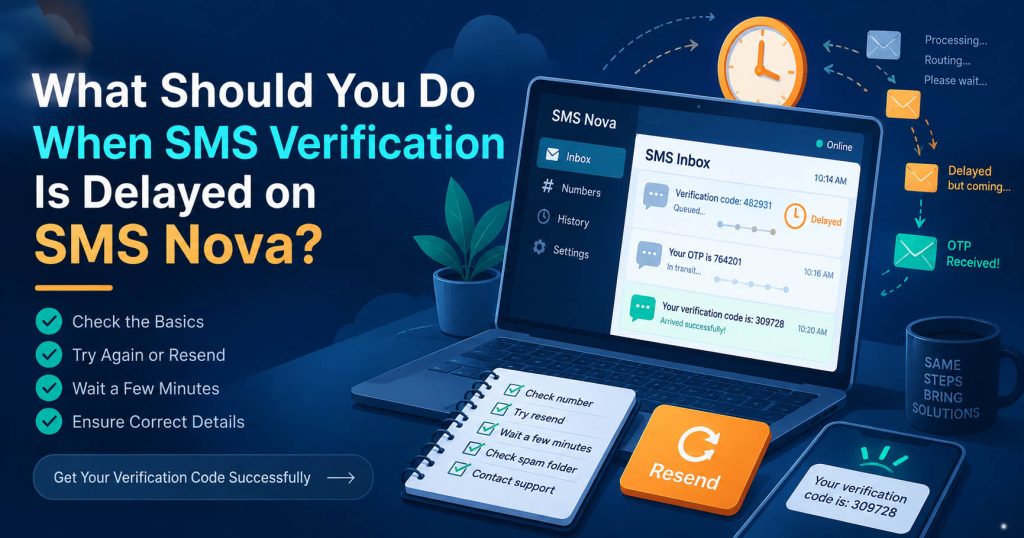
Instead of choosing a random number, you should select the correct combination:
Country + Service
After obtaining the number, enter it on the website that requires verification and keep the SMS Nova dashboard open to monitor incoming messages. If the OTP does not appear immediately, wait for a reasonable amount of time. You should not repeatedly click Resend because the website may apply a rate limit. When multiple SMS messages appear, check the timestamps and use the latest OTP.
When Should You Try a Different Number?
You should not change the number immediately just because the OTP has not arrived after a few seconds. You should only consider using a different number or route when there are clear signs that the current number is incompatible with the platform or that the SMS is continuously not being delivered. Changing numbers too many times and repeatedly sending requests may cause the website’s anti-abuse system to become stricter.
What Can Businesses Do to Reduce SMS Verification Delay?
From a system perspective, businesses implementing SMS OTP can also significantly reduce latency. The first step is to choose high-quality routing and reduce unnecessary intermediary layers. Businesses also need to monitor performance by country and carrier, rather than assuming that every market has the same speed.
Monitor Delivery Status
Delivery Reports help businesses know whether an SMS is: Queued, sent, delivered, or failed. This information is very useful for detecting slow routes.
Control Throughput
If the system handles a large volume of OTPs during peak hours, throughput must be sufficient to prevent the queue from becoming too long. An advertising campaign or login spike can cause the number of requests to increase rapidly within a few minutes. If the system is not designed for peak traffic, OTPs will be queued.
Design a Reasonable OTP Expiration Time
If the OTP has an expiration time that is too short while the actual SMS route has high latency, the user experience will be very poor. Users may repeatedly receive codes when the code is already close to expiring and then click Resend again.
This creates a cycle:
Delay → OTP expires → Resend → queue increases → delay continues
Therefore, expiration must balance security with actual delivery capabilities.
Have a Fallback Method
For important accounts, businesses should consider adding other verification methods besides SMS. This helps reduce complete dependence on the carrier network.
Does a Delayed SMS Mean That the SMS Has Been Lost?
No. An SMS may be in a waiting state and still be delivered later. For example, when a device loses signal, the carrier may hold the message and try again later. Therefore:
Delayed ≠ Failed
However, if the system has already determined that the SMS cannot be delivered or the website does not support that number, continuing to wait will not help the message appear. From the user’s perspective, what matters is observing the context.
If an SMS regularly arrives after a certain period of time but eventually appears, that is latency. If only one particular website can never send the code while other services are still working normally, the issue may be related to the sender, route, or compatibility.
Frequently Asked Questions About SMS Verification Delay
How Long Does an SMS Verification Message Usually Take to Arrive?
There is no fixed time for every service. Under good conditions, an OTP usually arrives quite quickly, but the actual time depends on the route, carrier, country, and network status.
Why Is the OTP Sometimes Fast and Sometimes Slow Even with the Same Number?
Carrier status, traffic, queue, and SMS route can change over time. Therefore, the same number can still have different latency across different requests.
Why Does an Older OTP Arrive After a Newer OTP?
SMS messages are not necessarily delivered in the same order when multiple requests are sent close together. An older message may remain in the queue longer than a newer message.
Can a Delayed OTP Still Be Used?
Only if the code is still within the validity period specified by the website. If the website displays “Code expired,” request a new code.
Does a Virtual Phone Number Make SMS Verification Slower?
Not necessarily. Latency depends on many factors beyond the number type, including the carrier, route, sender, and the platform sending the OTP.
Why Is International SMS Slower?
International SMS may have to pass through more carriers, interconnects, and verification systems than domestic SMS.
Can Carrier Filtering Cause an OTP to Be Delayed?
It can. Filtering systems have to evaluate traffic before processing it, and in some cases, they may delay or block the message.
Should You Keep Pressing Resend Code?
No. Doing so can create multiple OTPs, cause code confusion, and trigger a rate limit.
When Should You Try a Different Phone Number?
When there are clear signs that the current number is not accepted by the platform or that the route is incompatible, rather than simply because the SMS is delayed for a few seconds.
Reference sources:
https://aws.amazon.com/vi/blogs/messaging-and-targeting/a-guide-to-optimizing-sms-delivery-and-best-practices/
https://www.infobip.com/docs/sms/troubleshooting
https://help.twilio.com/articles/360055071374-Troubleshooting-Twilio-Programmable-Messaging-Delivery-Delays
Need a Virtual Number Right Now?
Skip the wait — rent an instant virtual number and start receiving SMS codes in seconds.

 Apple
Apple  Telegram