Need a Virtual Number Right Now?
Skip the wait — rent an instant virtual number and start receiving SMS codes in seconds.
How Virtual Phone Numbers Power Fast and Private Online Verification · 0:50
Transcript
When a website sends an OTP to a virtual phone number, behind what appears to be a simple action is an entire processing chain involving the verification system, SMS provider, mobile carrier, and messaging platform. Understanding this mechanism correctly will help you choose a suitable temporary phone number and avoid many common verification errors.
How Does a Virtual Phone Number Work in Online Verification?
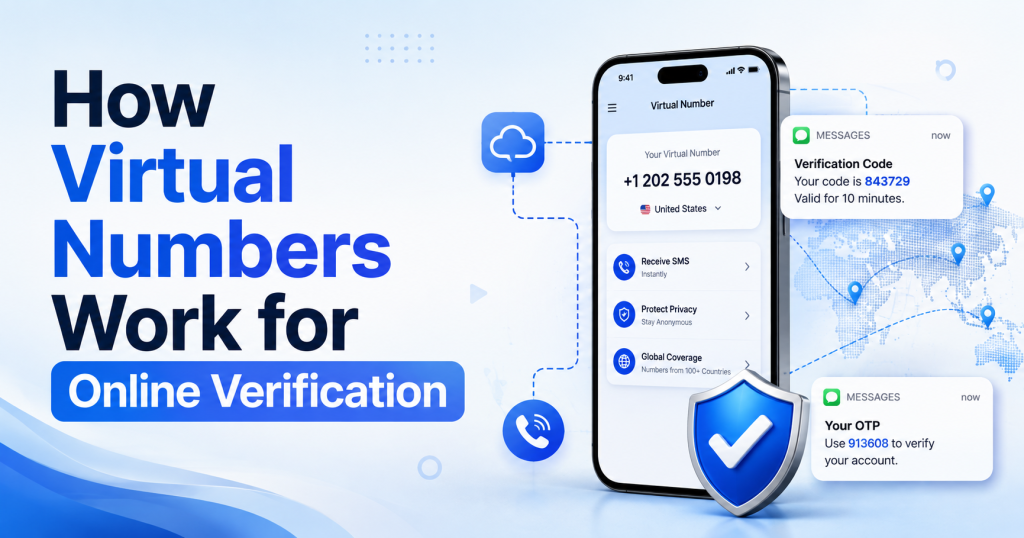
Technically, a virtual phone number is a number that can receive or route voice and SMS traffic without necessarily being directly tied to a physical SIM card inserted into the end user’s device.
In the online verification process, the phone number acts as an identifier that can receive messages. When you enter a number on a website, the platform does not simply store that string of digits. The system may check various factors such as the country code, number type, carrier, usage history, and SMS delivery capability before deciding whether to send the code.
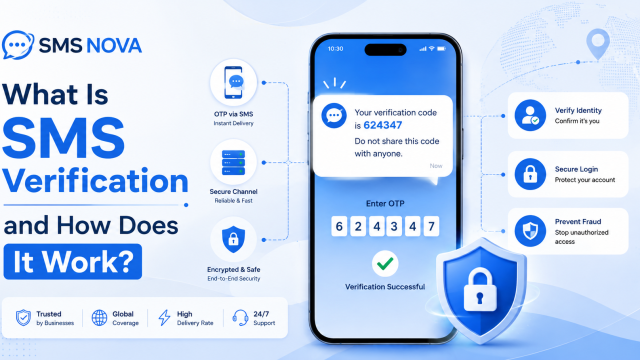
A typical verification session proceeds as follows:
1. The user enters a virtual phone number on the website or application.
2. The platform creates a verification session.
3. The server generates a time-limited OTP.
4. The SMS sending request is forwarded to the messaging system.
5. The SMS Gateway or A2P SMS provider routes the message.
6. The mobile carrier delivers the SMS to the destination number.
7. The virtual number management system receives the message.
8. The content is displayed in the Web Inbox or dashboard.
9. The user enters the OTP.
10. The server checks the code, its validity period, and the verification session before accepting it.
An important point is that the virtual phone number does not generate the OTP itself. The OTP is generated by the service that the user is verifying. The virtual number only serves to receive the message that is sent to it.
How Do Virtual Phone Numbers Receive SMS and OTPs?
To understand this more deeply, it is necessary to look at the path a verification message takes.
When a user clicks “Send code,” the website typically calls a messaging service through an API. This message belongs to the A2P SMS – Application-to-Person SMS category, meaning an SMS sent by a software system to a user.
The processing flow can be briefly described as:
Application → Verification API → SMS Gateway → mobile carrier → receiving number → number management platform → user.
In this chain:
- Verification API creates and manages the verification session.
- SMS Gateway forwards the request from the software to the telecommunications network.
- Mobile Network Operator distributes the SMS.
- MSISDN is the subscriber number identifier used as the receiving address.
- Sender ID or Short Code helps identify the source of the message.
- Web Inbox is where the user reads the message when using a number managed online.
Therefore, when an OTP does not arrive, the error can occur at any point in the chain and is not necessarily caused by the phone number.
How Is an OTP Different from a Regular SMS Message?
OTP stands for One-Time Password, meaning a password that can be used only once.
A properly implemented OTP usually has three characteristics:
- It can only be used once.
- It has a short validity period.
- It is linked to a specific verification session or request.
For example, the system may generate a 6-digit code and allow it to be used only for a few minutes. If the user requests a new code, the previous code may be invalidated. This is especially important with temporary phone numbers, because the rental period of the number and the validity period of the OTP are two different concepts. A number may remain valid for 20 minutes, while the OTP may only be valid for 5 minutes.
Can a Virtual Phone Number Be Used to Verify an Account?
Yes, but the more accurate answer is: it depends on the platform and the type of number. A number may technically be capable of receiving SMS but can still be rejected by a website before or after the code is sent.
Today’s platforms can often check:
- The country of the number.
- Line Type.
- The carrier.
- Whether it is VoIP or mobile.
- How many accounts the number has appeared in.
- Fraud history.
- The frequency of OTP requests.
- The user’s behavioral patterns.
Therefore, we always emphasize one principle:
The ability to receive SMS does not mean the ability to pass the verification step.
If a system only accepts Mobile Numbers, a VoIP Number may still be able to receive SMS but be rejected from the outset.
Distinguishing VoIP, Non-VoIP, and Temporary Phone Numbers
This is the part that most often causes confusion.
VoIP Numbers
A VoIP Number uses Internet infrastructure to provide some or all voice, messaging, and routing functions.
This type of number is very common in:
- Cloud phone systems.
- Customer service systems.
- Business phone systems.
- Virtual number services.
Some VoIP numbers support SMS, while others do not. In addition, many platforms can identify VoIP numbers through Line Type data and apply their own policies.
Non-VoIP Numbers
In the virtual number market, “non-VoIP” is commonly used to refer to numbers with characteristics closer to traditional mobile numbers. However, this is not a guarantee that the number will always be accepted.
Verification capability still depends on:
- Carrier.
- Country.
- Number history.
- Routing.
- The platform’s policies.
Temporary Phone Numbers
A temporary phone number describes the usage lifespan rather than specifically describing the underlying technology. A temporary number can be mobile, VoIP, or another type of line depending on the provider’s infrastructure. The common point is that the user only controls the number for a limited period of time. This is a very important distinction.
VoIP/non-VoIP refers to the type or infrastructure of the number, while temporary/permanent refers to the duration and right of use of the number.
How Are Dedicated Numbers Different from Shared Numbers?
In addition to Line Type, users should pay attention to number access rights.
Dedicated Number
This is a number assigned exclusively to one user during the rental period.
Advantages include:
- No other user uses it at the same time.
- Messages have a higher level of privacy.
- Fewer OTP conflicts occur.
- More suitable for verification sessions that require control.
However, dedicated does not mean permanent.
If the rental period ends, the number can still be reclaimed.
Shared Number
A Shared Number can be used by multiple people.
This type of number is usually cheaper but has several limitations:
- SMS messages may be visible to other people.
- The number is more likely to be used too many times.
- It has a higher likelihood of being flagged by platforms.
- It is not suitable for sensitive data.
From an operational perspective, a Dedicated Number is almost always the better choice if privacy and stability are more important than cost.
Why Does a Virtual Phone Number Not Receive an OTP?
A failed OTP should not simply be diagnosed as “the number is not working.” In practice, we usually divide the causes into 5 groups.
1. The Platform Rejects the Line Type
The website may not support VoIP, Disposable Numbers, or numbers belonging to certain carriers. In this case, repeatedly changing to another number of the same type usually does not solve the problem.
2. SMS Delivery Issues
The message may be lost or delayed along the following routes:
- SMS Gateway.
- Carrier.
- International routes.
- Spam filters.
- A2P abuse prevention systems.
Some SMS routes have different levels of stability depending on the country.
3. The Number Has Been Used Too Many Times
Major platforms may limit the number of accounts linked to the same number.
Need a Virtual Number Right Now?
Skip the wait — rent an instant virtual number and start receiving SMS codes in seconds.
This is why a number may still receive SMS but show a notification such as “number already used.”
4. Rate Limit
When a user sends too many OTP requests within a short period, the system may:
- Stop sending the code.
- Increase the waiting time.
- Invalidate the previous code.
- Temporarily lock the verification session.
5. Incorrect Format
One of the most basic errors is using the wrong country code or format. Many systems standardize phone numbers according to E.164, meaning that the number is generally stored in the format of country code + subscriber number. An incorrect format may prevent the system from correctly recognizing the number.
How to Increase the Chances of Receiving an OTP?
There is no way to guarantee that a virtual phone number will work with every platform.
However, users can significantly reduce errors by following these principles:
Choose the Right Country
Some platforms require a number that corresponds to the account or service region.
Check the Line Type
If the platform requires a Mobile Number, you should choose a suitable number type instead of using VoIP.
Do Not Request OTPs Continuously
A new OTP request may invalidate the previous code. In many cases, repeatedly requesting codes can also trigger a rate limit.
Use the Latest Code
If the system has sent multiple OTPs, normally only the latest code remains valid.
Monitor the Rental Period
Do not start verification when the temporary phone number is about to expire.
Check Whether the Platform Supports Virtual Numbers
If the service actively blocks temporary or virtual numbers, changing to multiple numbers of the same type will not provide any benefit.
What Is Number Recycling and Why Does It Matter?
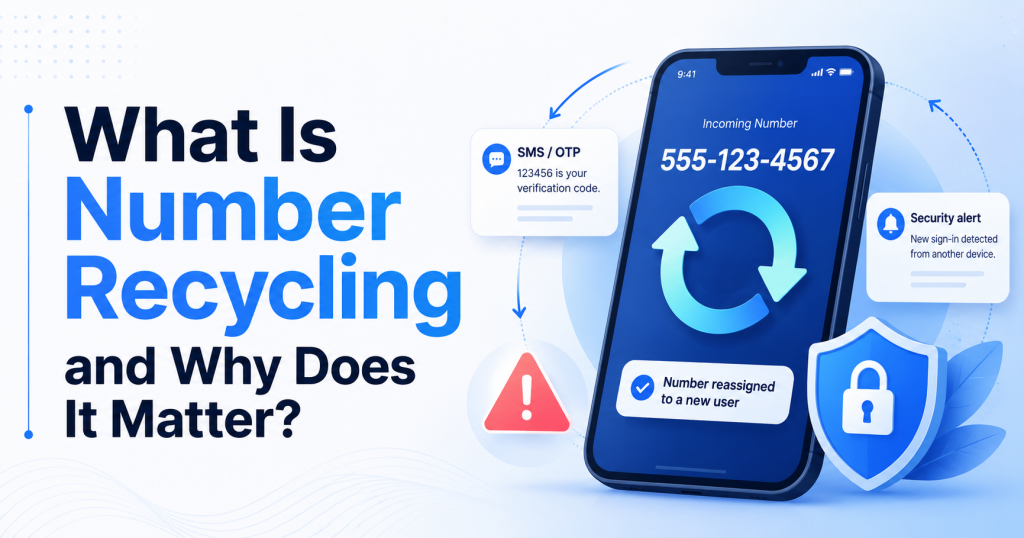
This is one of the most important issues when using temporary numbers. Number Recycling occurs when a number is no longer used by its previous user and is then reassigned by the provider to someone else. With temporary phone numbers, this process may happen more quickly than with long-term subscriptions.
This creates an obvious risk:
If you use a temporary number to register an account but do not remove the number from the account before losing access to it, another person who uses that number in the future may receive messages that were intended for you.
That is why we do not recommend temporary numbers for:
- Bank accounts.
- Financial wallets.
- Primary email accounts.
- Important business accounts.
- Accounts that require long-term recovery.
Are Virtual Phone Numbers Safe?
The answer depends on the usage model. If the goal is not to provide your personal number to a short-term service, a virtual number can improve privacy. However, if a public number is used to receive sensitive OTPs, the level of security may be significantly lower than that of a private number.
Users should evaluate four factors:
Who Has Access to View the SMS?
If multiple people can view the Web Inbox, never use it for sensitive data.
How Long Do You Control the Number?
A number that is only available for a few minutes is not suitable for an account that may need to be recovered months later.
Can the Number Be Reassigned?
If so, you should avoid leaving the number linked to an account after it expires.
Is SMS the Only Security Method?
SMS OTP is convenient, but it is not the strongest authentication method in every situation. For important accounts, users should combine or prioritize authentication methods with stronger phishing resistance when the platform supports them.
When Should You Use a Temporary Phone Number?
Based on practical experience, a temporary phone number is most suitable for three types of needs:
Short-Term Verification
You only need to receive an OTP or a confirmation message.
Protecting Your Personal Number
You do not want to provide your primary number to a service that does not require long-term contact.
System Testing
Developers, QA teams, or operations teams may need multiple numbers to test SMS delivery processes.
Conversely, if an account has long-term value, a permanent number or personal number is still more suitable.
How to Use a Virtual Phone Number to Receive a Verification Code at SMS Nova
With SMS Nova, the basic process includes:
Step 1: Choose a Service
Select the website or application where you need to receive the code.
Step 2: Choose a Country
Select the country and the available number type.
Step 3: Rent a Temporary Phone Number
After the system assigns the number, check the remaining time of the rental session.
Step 4: Enter the Number on the Platform to Be Verified
Make sure the country code and format are correct.
Step 5: Request the OTP
Send only one request and wait for the SMS response.
Step 6: Check the SMS on SMS Nova
When the message arrives, the code will be displayed on the dashboard.
Step 7: Enter the OTP and Complete Verification
Use the latest code before it expires.
From an operational perspective, what matters is not simply “having a phone number,” but choosing the right type of number for the right service, country, and time.
Frequently Asked Questions
Can Virtual Phone Numbers Receive OTPs?
They can. The ability to receive them depends on the Line Type, carrier, SMS route, and platform policies.
Are Temporary Phone Numbers VoIP?
Not necessarily. “Temporary” describes the period of use, while VoIP describes the technology or type of connection.
Does Non-VoIP Guarantee OTP Reception?
No. Non-VoIP may be more suitable in some cases, but it is still subject to the policies of the platform and carrier.
Can I Receive a Verification Code in Germany If I Am Not in Germany?
Yes. No matter where you are, if you want to receive a verification code in Germany, you can access SMS Nova to receive the verification code at any time.
Why Can a Number Receive SMS but Not Complete Verification?
The website may reject the number based on its Line Type, usage history, country, or anti-fraud system.
Is a Dedicated Number Safer Than a Shared Number?
Generally, yes, because access to the number and SMS is more strictly limited.
Should I Keep a Long-Term Account Using a Temporary Phone Number?
It is not recommended if you cannot ensure continued control of the number in the future.
Can an Expired Number Be Reassigned?
It can. This is known as Number Recycling and is a risk that should be taken into consideration.
Conclusion
Understanding how virtual phone numbers and temporary phone numbers operate correctly will help you choose the right number, reduce OTP errors, and avoid access-related risks. If you still have questions about SMS, Line Type, or online verification, leave a comment, share the article, or explore more in-depth guides on SMS Nova.
Need a Virtual Number Right Now?
Skip the wait — rent an instant virtual number and start receiving SMS codes in seconds.

 Apple
Apple  Telegram